


Why is Poland in pole position in the European car market?
 Warsaw, PolandMarch 23 , 2026
 9 minute read
The European car market is evolving in fits and starts, with sales either surging or stalling in territories close enough to share a border. But where precisely is this growth, and where are these declines?
Perhaps surprisingly, the countries experiencing greatest acceleration are not the traditionally strong markets like Germany, France and Italy, with their large economies and proud motoring marques. Instead, it is the emerging markets of Eastern Europe – and most notably Poland – that increasingly occupy the fast lane.
At the end of 2025, Poland continued to be among the leaders in major EU automotive markets. It recorded 597,435 new vehicle registrations in 2025, second only to Spain – an 8.3% increase over the previous year[1], consolidating Poland’s position among Europe’s fastest-expanding major car markets.
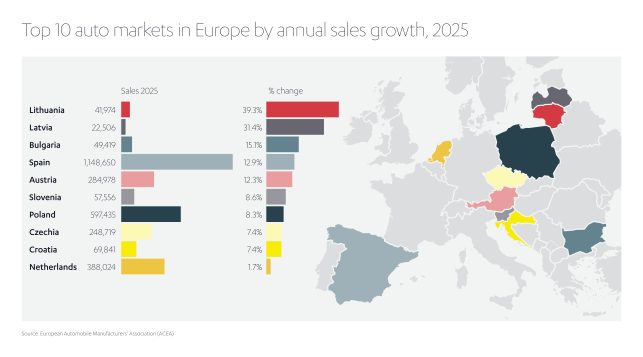
During the same period, historic centers of motor manufacturing were dealing with rather different trajectories. France fell by 4%, Italy shrank by 2.1% and Germany grew by just 1.4%[2].
How are new payment models helping to drive performance?

Manager Director
Jameel Motors Poland
“Here in Poland we have been witnessing a unique performance among European countries,” confirms industry veteran Marcin Słomkowski. As Manager Director, Jameel Motors Poland, the official distributor of Geely Auto and GAC in the country, Marcin has his finger on the pulse of trends affecting the nation’s booming auto market.
“What is more, all the signs remain positive for continued strength,” he says. “This year, for example, we should register around 7%-8% total growth across the market, or something close to 600,000 units. Surprisingly, that is even better results than we had before the COVID-19 pandemic, which obviously derailed the domestic and international economy for some time.”
What precisely is driving such sustained growth? A closer examination of the figures reveals a more detailed picture.
Company vehicles are fueling much of the momentum, comprising almost 70% of new car sales in Poland.[3] However, sales are actually rising across all segments, within household and commercial sectors alike, with the most rapid growth seen among individual customers.
A key factor contributing to this growth is the stunning incursion of vehicles from one market in particular: China.
“In Poland at the moment we have more than 30 automotive brands from China competing for customers,” notes Marcin. “This is particularly transformative because as little as two years ago we had just a single Chinese brand in the Polish market: MG Motor, part of SAIC Motor Corp.
“Having so many Chinese brands within our market is phenomenal, and while not all are active yet in terms of marketing, we can expect them to focus heavily on raising their profiles in the near future,” he believes.
How is this affecting the Polish used car market?
Rather than providing direct competition for long-established European brands, many of these new Chinese market entrants have instead been targeting a different segment of the market, epitomized by Poland’s famously vibrant used car culture.
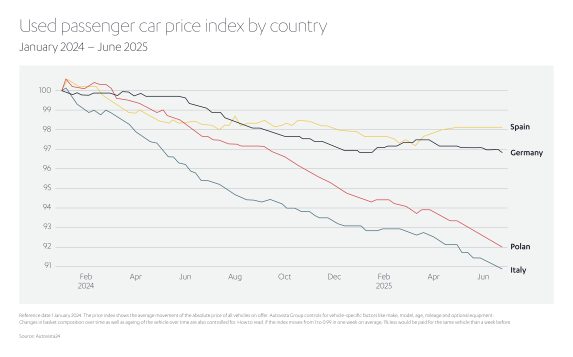
Yet despite the emergence of these affordable new alternatives, the secondhand vehicle sector continues to show impressive resilience. The number of used cars imported to Poland climbed 19.5% in 2024 to 880,000 units.[4] Inevitably these numbers trigger supply-and-demand issues. The Polish used car market is suffering long-term depreciation in terms of value-per-unit, with a downward trajectory indicating one of the segment’s sharpest declines in Europe.[5]
Given these new pricing paradigms, legacy carmakers have adopted bold new strategies to maintain sales of new vehicles.
Marcin explains: “Classic European manufacturers such as BMW, Mercedes and the Stellantis group (comprising brands like FIAT, Chrysler, Citroën, Peugeot and Vauxhall) have felt compelled to react in order to stay relevant. Some incredible retails deals have emerged recently. It is a dynamic marketplace which is changing at a radical pace, with new products, offers and promotions appearing almost daily.”
How are Chinese brands changing perceptions in Poland?
The changing face of technology heralds its own opportunities and challenges.
Unlike other countries, where electric vehicles (EVs) often of Chinese origin have made rapid inroads into domestic markets, Poland remains largely driven by traditional internal combustion engine (ICE) technology.
Hence, while emerging Chinese EV leader BYD has become a household name across much of the world (producing more than 4 million vehicles in 2024, a tenfold increase over five years[6]), its impact in Poland has been much more muted. Instead, rival Chinese manufacturers like Omoda, MG and BAIC, largely reliant in Poland on the conventional ICE powertrains in their portfolios, have set the pace.
With European brands increasingly obligated by EU regulations to produce EV or plug-in hybrid vehicles (PHEVs), Polish auto dealers are feeling pressurized to compete with enticingly-low foreign ICE prices.
Aggressive deals for leasing options have raised a red flag among market watchers for exposing the Polish motor industry to dangerously high liabilities regarding ‘residual value’ – the nominal worth of a vehicle at the conclusion of its leasing term.
The strategy – described as a form of ‘panic mode’ by Marcin – has seen some established brands guaranteeing very high levels of residual value after the expiration of fixed-term leases (up to 85% over two years). This encourages a lively ecosystem of new sales because customers need only source financing for a relatively small balance to make a deal affordable. However, this is a hazardous tactic because actual market value might decline by far more than anticipated, transferring the financial risk on to the accounts of leasing companies.
“Keeping residual values artificially high can make a huge impact on new customer recruitment,” Marcin warns. “Yet it can cause severe problems down the line when the aspirations of marketing collide with the reality of market forces.”
The potential for a cessation of the conflict between Russia and Ukraine may offer an eventual lifeline. Opening up both of these territories to secondhand car imports will provide dealers in Poland with vast new markets for divesting used vehicle stocks – a chance, in other words, to monetize any potentially over-valued assets.
Is GDP growth emboldening new buyers?
Whatever the long-term implications, high discounts have undoubtedly helped to stimulate demand from customers who might once have found new cars beyond their economic reach. In 2024 sales of new cars to private individuals grew by 34.1% as families seized the opportunity to upgrade their vehicles on favorable finance terms.[7] When faced with the choice of buying a secondhand car from a legacy brand, or paying a similar amount for a brand new vehicle from a new Chinese brand, increasing numbers of Polish motorists are opting for the latter.
Looking ahead, a sense of optimism pervades the Polish auto industry, driven in part by the promising macroeconomic picture.
“The Polish economy is growing significantly,” notes Marcin. “This year, for example, we expect 4% growth in national GDP. With greater wealth Polish people can take a more speculative attitude to personal mobility. It might mean having more than one car per household, or parents buying a car for their children. The demand is there, and this presents enormous opportunity.”
What are Jameel Motors’ partnerships with GAC and Geely Auto?
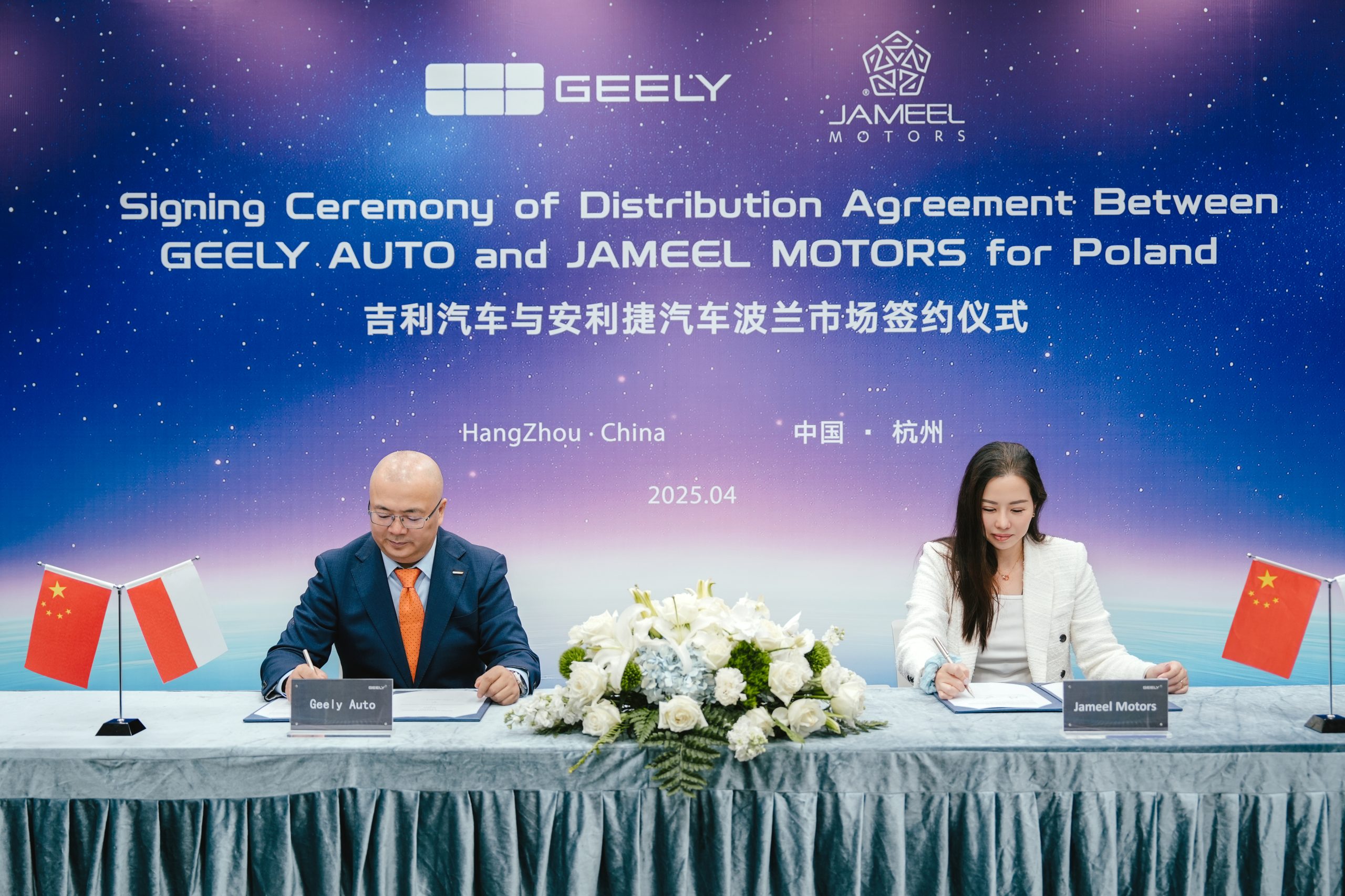
Against this backdrop, Jameel Motors Poland has this year signed two new distribution agreements with Chinese manufacturers to turbo-charge its business within the country.
In April 2025 it was announced that Jameel Motors and GAC, one of China’s largest carmakers, are to enter the Polish market via a distribution deal for GAC’s sustainable vehicles.
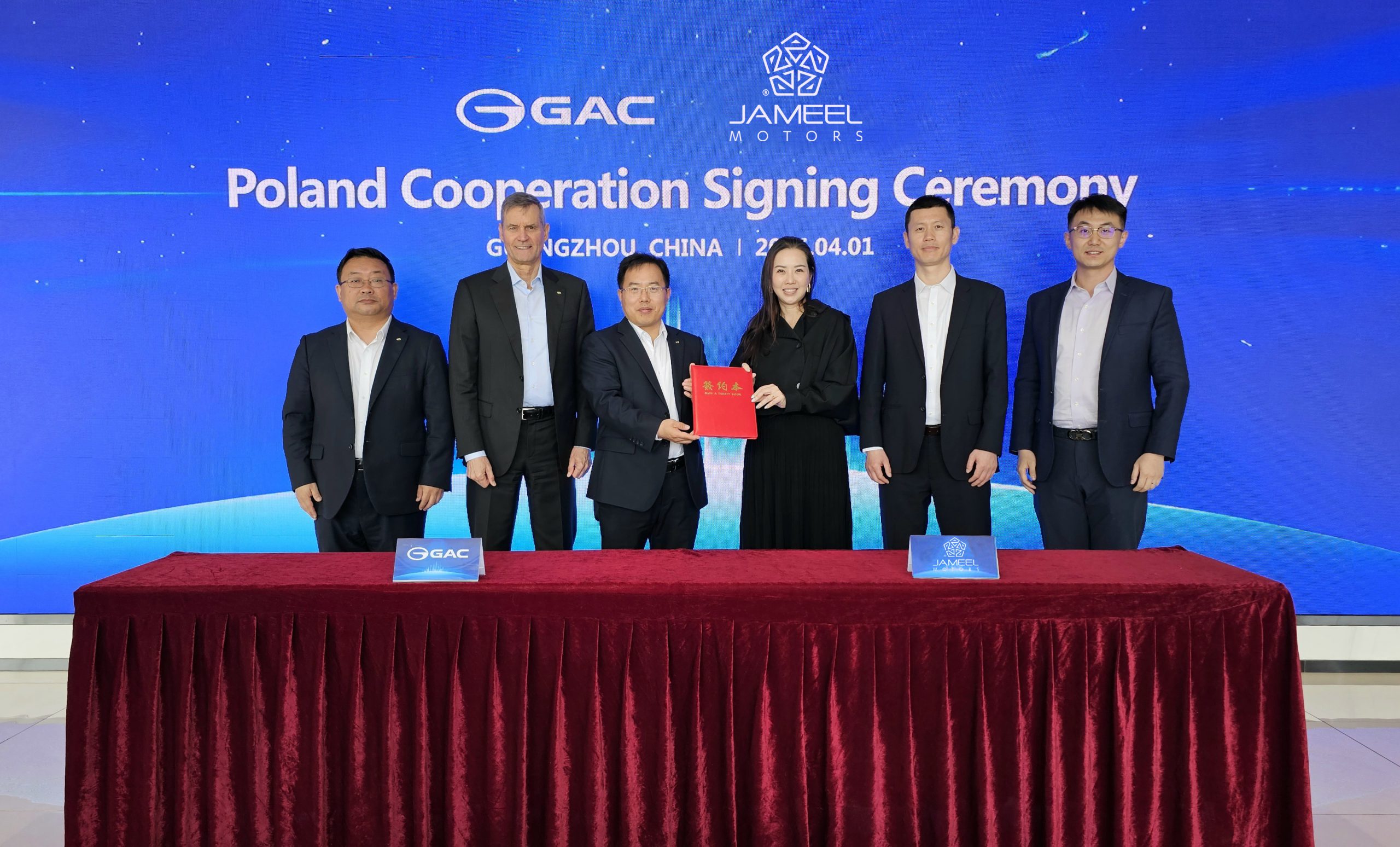
(王玉平), CEO, Jameel Motors; Ping Chen (陈平), Managing Director, OEM Management & China Business Development, Jameel Motors. Credit: © Jameel Motors
Two brands will go on sale initially in the third quarter of 2025: The Aion, GAC’s smart new energy vehicle range, and the Hyptec, a high-end luxury electric brand. Both feature cutting-edge design, advanced driver assistance modes and extended driving distances of up to 520 km per charge. Three GAC models will be available at launch: The Aion V, Aion Y Plus, and Hyptec HT.
As part of the agreement Jameel Motors will develop a nationwide dealer network to ensure comprehensive service support and to provide potential buyers with a suite of attractive financing options.
Then, in May, Jameel Motors revealed it was partnering with China’s Geely Auto to launch Geely’s new energy passenger vehicles in Poland.
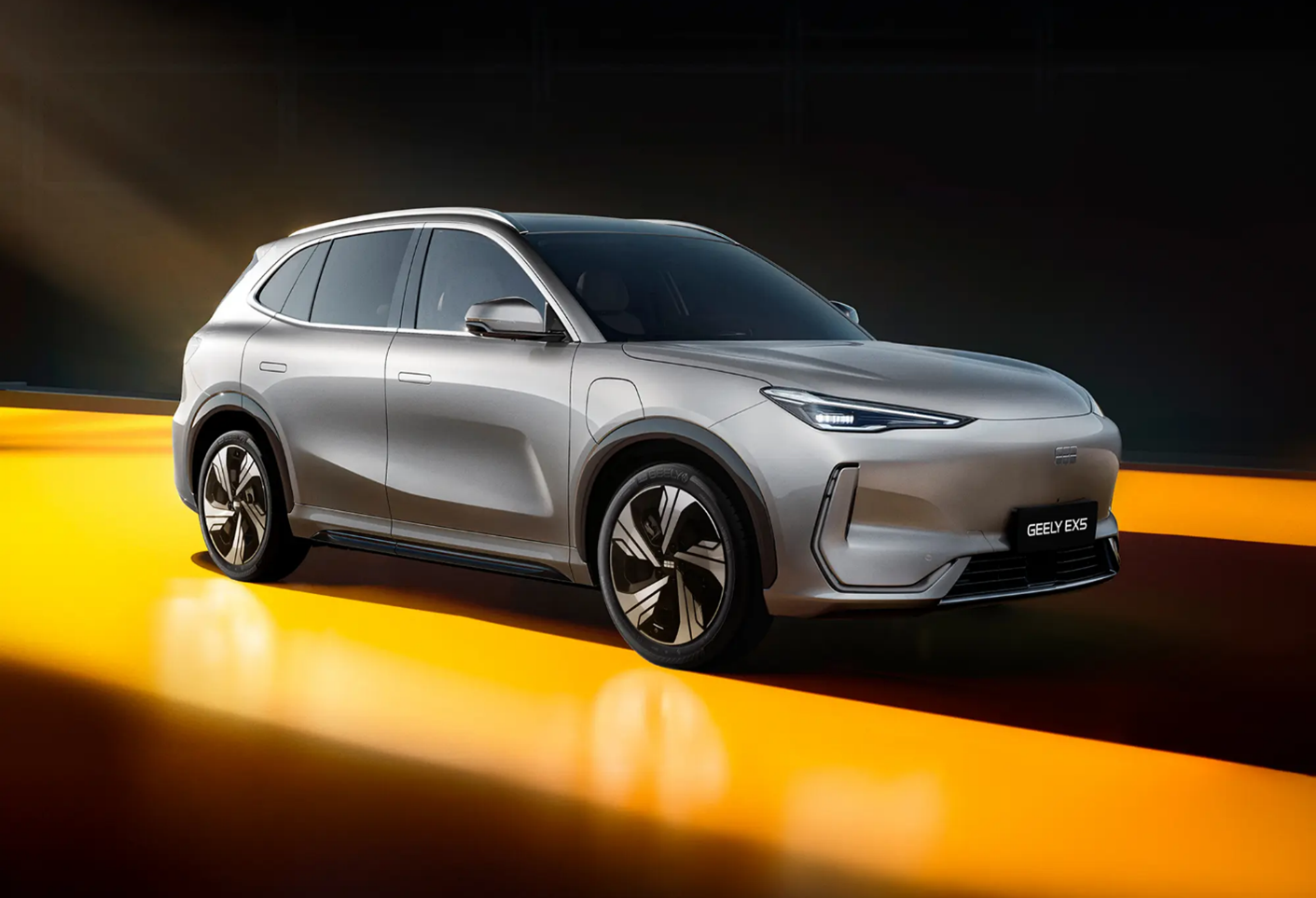
Two models will hit showrooms initially: The Geely EX5, a next-generation electric SUV, along with a plug-in hybrid (PHEV) vehicle from the C-SUV segment. Both are built upon Geely’s self-developed GEA (Global Intelligent Electric Architecture) platform, merging unique design and exceptional safety features with outstanding value.
[1] https://www.acea.auto/files/Press_release_car_registrations_December_2025.pdf
[2] https://www.acea.auto/files/Press_release_car_registrations_December_2025.pdf
[3] https://polandinsight.com/polish-automotive-market-rebounds-in-2024-new-car-sales-reach-a-five-year-high-54697/
[4] https://polandinsight.com/polish-automotive-market-rebounds-in-2024-new-car-sales-reach-a-five-year-high-54697/
[5] https://autovista24.autovistagroup.com/news/mix-of-stability-and-concern-for-polands-automotive-markets/
[6] https://tridenstechnology.com/byd-sales-statistics/
[7] https://polandinsight.com/polish-automotive-market-rebounds-in-2024-new-car-sales-reach-a-five-year-high-54697/


 Rome, ItalyMarch 18 , 202611 minute read


