Is the Polish auto market ready to break the ICE?
 Warsaw, PolandMarch 27 , 2026
 9 minute read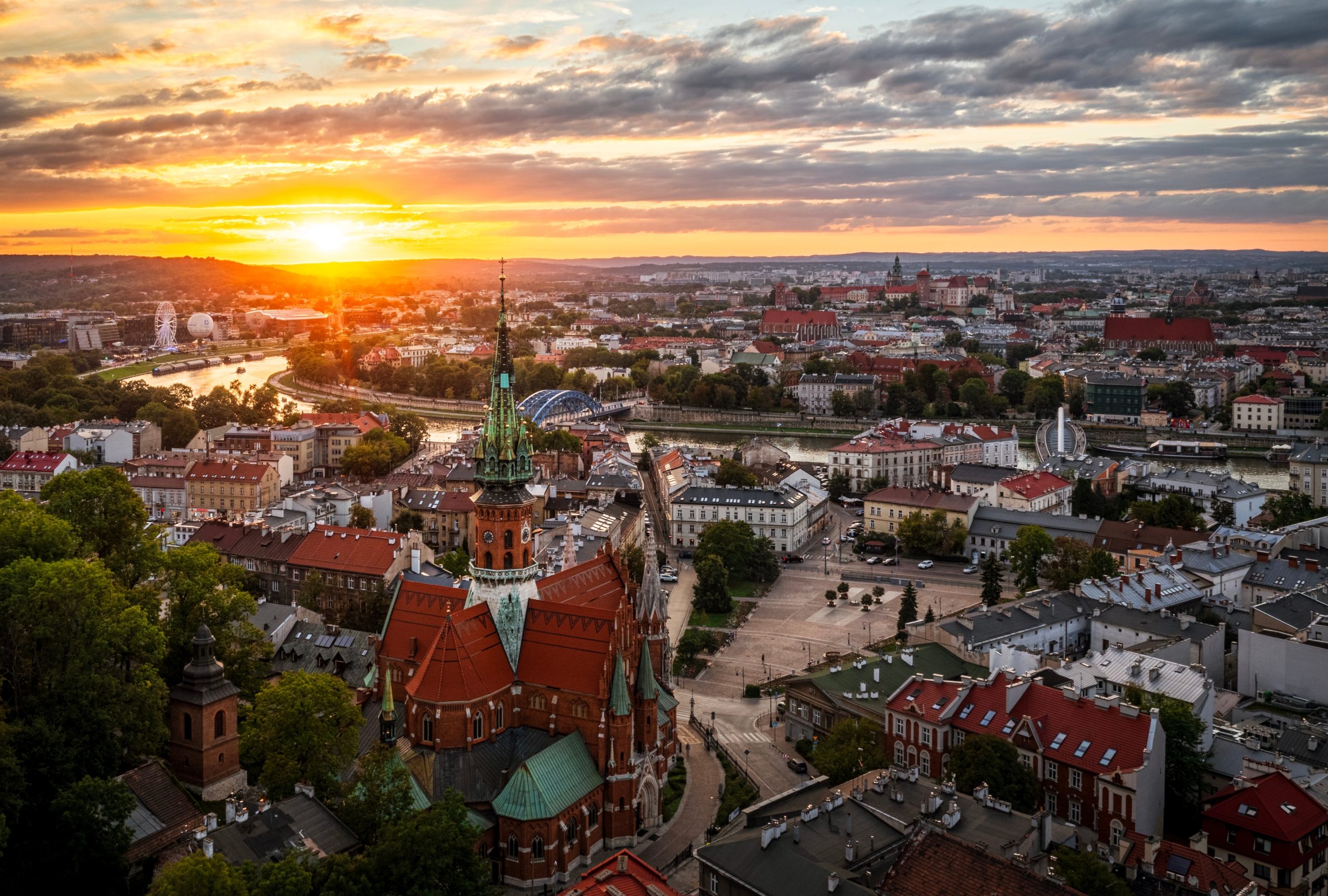
Aerial view of Podgorze district in Krakow, Poland
The Polish auto industry is enjoying a phase of lightning growth, firmly established in the leading pack over many of its larger EU rivals in terms of new vehicle sales.
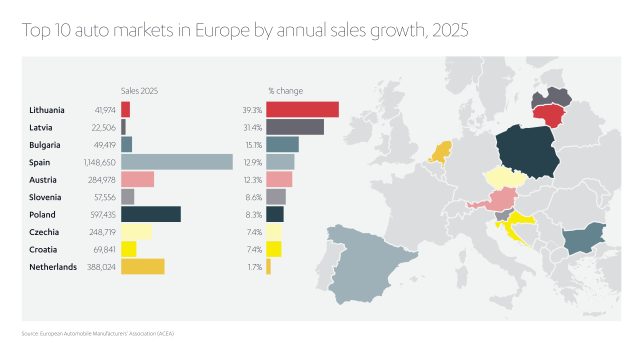
Full-year 2025 data shows Poland reached a historic record of 597,435 new car registrations[1], second only to Spain, marking an 8.3% year-on-year expansion for passenger cars and light commercial vehicles (breaking a record that was set back in 1999). During the same period, historic centers of motor manufacturing were dealing with rather different trajectories. France fell by 4%, Italy shrank by 2.1% and Germany grew by just 1.4%[2].
Yet Poland’s auto industry has another distinguishing feature marking it out from its European neighbors – one with economic, cultural and environmental dimensions. As electric vehicles (EVs) surge around the world, Poland’s car buyers still seem reluctant to consign their ICE vehicles to the scrap yard.
How popular are ICE vehicles in Poland?
By the close of 2025, battery-electric vehicles (BEVs) achieved a 17.4% market share across the EU, driven by a full-year registration surge of over 26%, while plug-in hybrids (PHEVs) captured 9.4% of the overall market.[3]
Poland, encouragingly, surpassed these growth trajectories with ease. The country maintained triple-digit percentage growth in new BEV registrations throughout the year, ultimately closing FY25 with a 6.4% total market share.[4]
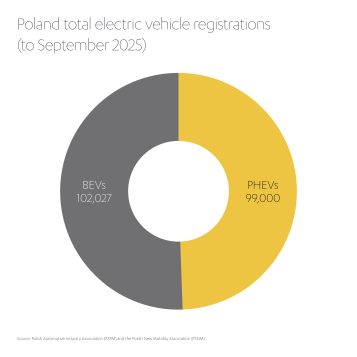
Crucially, however, these trends build upon such a lowly baseline that so-called new energy vehicles (NEVs) remain something of a rarity in Poland. Just over 100,000 BEVs are navigating the nation’s roads, alongside an additional 99,000 PHEVs. Overall, EVs still claim only around 6% of total market share, indicating that Polish society as a whole remains largely wedded to ICE technology.[5]
“Even if the entire EV market this year climbs closer to 7%, it is clear to motor manufacturers and distributors that this sector alone is not yet delivering the volumes they need,”
observes Marcin Słomkowski, an experienced industry expert and now the Managing Director of Jameel Motors Poland.
Perhaps this phenomenon can be partly explained by the relatively high cost of NEVs and the below-average earning power of families in Poland.
A typical full-time wage per employee in Poland was a little over €20,000 in 2024, just half of the European average, and considerably behind the salary pacesetters of Luxemburg (€80,000+), Denmark (€70,000+) and Ireland (€60,000+).[6]
Peering beneath the hood of the Polish auto industry reveals more causal factors, as well as telltale signs of the nascent EV/PHEV segment experiencing exciting acceleration in the near future.
How could new choices help overcome market resistance?
Marcin has his finger on the pulse of the Polish auto industry, and in particular the challenges and opportunities of integrating green imperatives into the marketplace.
His is a timely analysis. In April 2025 Jameel Motors and GAC, one of China’s largest carmakers, announced a distribution deal for GAC’s sustainable AION and Hyptec vehicles in Poland. Soon afterwards, in May, Jameel Motors revealed it would also partner with China’s Geely Auto to help launch the latter’s EX5 (a next-generation electric SUV) in Poland, as well as the Starray EM-i, a PHEV vehicle from Geely’s compact SUV segment.
Making a breakthrough in market share will mean overturning some long-held assumptions about the appetite for NEVs in Poland.
“The consumer perspective here in Poland is actually quite unique,” says Marcin. “Worldwide, Chinese brands are increasingly renowned for their EVs. However, here in Poland even Chinese vehicles are dominated by ICE powertrains, with brands such as OMODA and BAIC being prominent players.”
Yet the Polish marketplace is nothing if not dynamic. A series of fundamental shifts have motivated the recent spike in EV purchases domestically. Chief among them? Strong financial inducements.
Are subsidies changing buyers’ perceptions?
“In recent times we have had a very attractive government subsidy on offer, with buyers entitled to a grant of PLN [Polish Zloty] 30,000, or just over €7,000, if they buy an electric car. To many people this is a lot of money and can make the difference between buying an ICE car (even a secondhand ICE) or finally making the leap and purchasing an EV,” says Marcin.
The taxation and regulatory environments are also being overhauled to promote the cause of cleaner, greener vehicles. Reforms to Poland’s NaszEauto program, applicable from October 2025, will widen the qualifying criteria for zero-emission vehicle subsidies and clarify the amounts on offer.[7]
Now, not only individuals and sole traders can apply for subsidies, but also non-governmental organizations, public institutions and national parks, as well as educational, medical and care facilities. Subsidy amounts will depend on the class of vehicle being purchased: Family cars will attract up to PLN 40,000, light commercial vehicles up to PLN 70,000, and passenger buses up to PLN 600,000. So far, 16,314 individual applications worth more than PLN 500 million (€118 million) have been submitted.[8]
Convenience is also key for people debating a switch from ICE to NEVs, with ‘range’ and ‘recharging’ the buzzwords to watch. In the early days of electric vehicles, motorists in Poland were naturally concerned that longer journeys were impractical because cars only went limited distances on a full battery. As for finding a convenient recharge station when needed? That was far from guaranteed.
Perceptions are changing, however, for which we have technology and investment to thank.
How fast are attitude towards EVs changing?
“Attitudes here are evolving fast,” says Marcin. “Maybe in times gone by an EV might last 200 or 300 miles on a single charge, but now we’re looking at double that distance, 500 or 600 miles – with some advanced models promising even more.
“In tandem with this, our EV support infrastructure in Poland is growing at an unprecedented pace. Currently in Poland we have just over 10,000 charging stations, and we expect that number to double again within two years. Most importantly, many of these new charging stations are of the powerful DC variety. So, while many charge stations in Europe are of the smaller 40 kilowatt class, here in Poland we’re looking at a new generation of 80, 100, 150 kilowatt stations. The difference is enormous because motorists can potentially charge their cars in 20 minutes rather than two to three hours.”
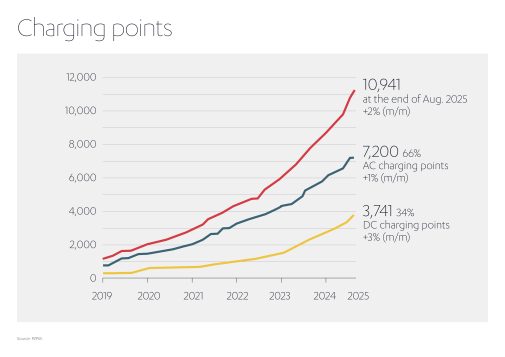
Coverage in cities is improving rapidly. The capital, Warsaw, has more than 800 charging points, while four other cities, Gdańsk, Kraków, Poznań and Szczecin, each have more than 300.[9]
This is merely the start of an even wider rollout, however. Just 13% of Polish highways along the Trans-European Transport Network (TEN-T) currently meet EU mandates for having a charging station every 60 km in each direction.[10] A new support program from the National Fund for Environmental Protection & Water Management of Poland (NFOSiGW) aims to remedy this shortfall with an initial PLN 1 billion (€236 million) fund to construct and expand the network’s high-speed charging grid.[11]
More sophisticated vehicles, proactive financial inducements and a sturdy support infrastructure – it’s a compelling pitch, and one which convinces Marcin and many others of a bright future for the burgeoning NEV sector in Poland.
How are Chinese brands electrifying further growth?
“The new Polish government is philosophically close to the EU and so aligns with the ongoing EV transition,” explains Marcin. “Therefore, it is perfectly reasonable to expect EV growth to develop at a greater pace than ever before, both in terms of volume numbers and the range of NEVs available.
“We do not have a particularly vibrant domestic car manufacturing industry here in Poland, so people are attracted to brands not out of patriotic loyalty, but because of value and quality. This is why I have such high hopes for Chinese EVs in our market, because they represent the synthesis of those attributes.”

Manager Director
Jameel Motors Poland
American, European and Korean cars currently dominate the evolving eco-vehicle market in Poland. In the first half of 2025, the best-selling EV brands were Tesla, Kia and Hyundai, followed by BMW, Mercedez-Benz, Citroën and Ford.[12] Toyota and Volvo led the plug-in segment, followed by BYD’s Seal U Sports Utility Vehicle.
The emergence of BYD as a primary player heralds the anticipated surge of Chinese NEVs in this fast-developing market.
“Once people actually get their hands on these products, and experience driving them, notions of them being a low-standard or ‘compromise’ option swiftly recede,”
says Marcin. “The reputation of EVs, and Chinese EVs in particular, are improving all the time.
“In terms of the GAC and Geely vehicles that we are offering, I sense an enormous appetite and enthusiasm, based on the number of potential customers who making enquiries, taking test-drives, and leaving positive feedback about design and drivability.
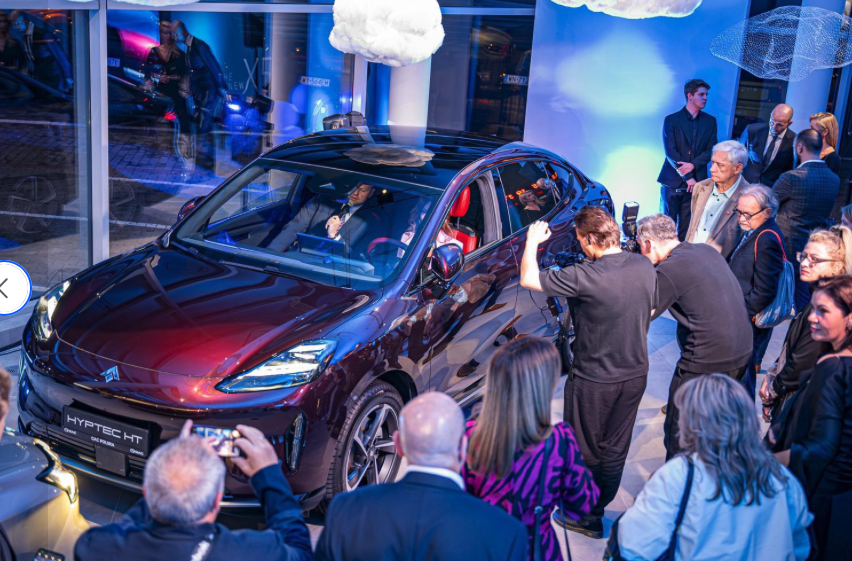
“People who have driven the GAC Hyptec, for example, report little difference in terms of materials compared to the established competitor models. A premium product but sold at a reasonable price – that is our passport to success. Particularly when you include the plug-in and hybrid segments, the future market potential for sustainable motoring here in Poland is, I believe, very wide indeed.”
[1] https://www.acea.auto/files/Press_release_car_registrations_December_2025.pdf
[2] https://www.acea.auto/files/Press_release_car_registrations_December_2025.pdf
[3] https://www.acea.auto/pc-registrations/new-car-registrations-1-8-in-2025-battery-electric-17-4-market-share/
[4] https://www.pzpm.org.pl/en/Europe/EUROPE-Registrations-of-vehicles/PASSENGER-CARS/Year-20252
[5] https://notesfrompoland.com/2025/10/08/number-of-fully-electric-passenger-vehicles-in-poland-passes-100000
[6] https://ec.europa.eu/eurostat/web/products-eurostat-news/w/ddn-20251112-1
[7] https://www.pzpm.org.pl/pl/content/download/21006/256326/file/Raport%20KPMG%20w%20Polsce%20i%20PZPM_Bran%C5%BCa%20motoryzacyjna.pdf
[8] https://www.pzpm.org.pl/pl/content/download/21006/256326/file/Raport%20KPMG%20w%20Polsce%20i%20PZPM_Bran%C5%BCa%20motoryzacyjna.pdf
[9] https://www.pzpm.org.pl/en/content/download/16942/152104/file/Licznik_Elektromobilnosci_2025-08_A4_EN.jpg
[10] https://mobilityportal.eu/poland-charging-infrastructure-may-2025/
[11] https://mobilityportal.eu/2-billion-boost-for-electromobility-in-poland/
[12] https://mobilityportal.eu/poland-emobility-record-3779-bevs-june-2025/


 Warsaw, PolandMarch 23 , 20269 minute read