


Is South Africa gearing up for the EV revolution?
 Johannesburg, South AfricaMarch 31 , 2026
 12 minute read
The global automotive trade is in the midst of its most radical shift since the invention of the internal combustion engine (ICE) displaced biological ‘horse-power’ – a revolution unfolding in a truly electrifying manner.
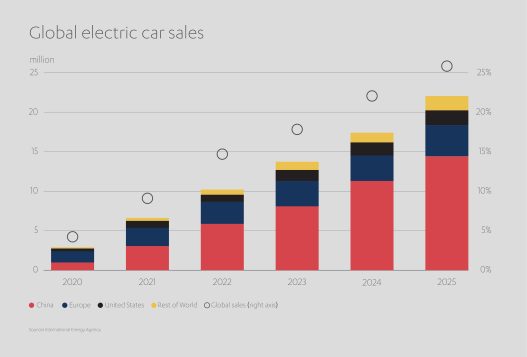
Electric car sales surpassed 20.9 million worldwide in 2025, a rise of 21% in the space of a year.[1] In China alone, nearly 16.5 million electric cars were sold in 2025, more than in the entire world just three years earlier. The phenomenon was not limited only to the three major markets of China, the USA and Europe, with sales outside these electric epicenters spiking 40% to 1.3 million.
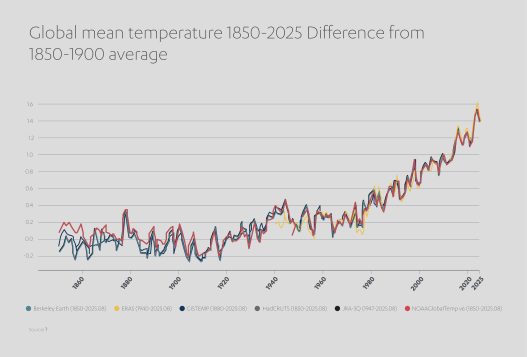
These surging sales come as governments and motorists begin to heed the words of environmental scientists and their warnings about global warming. The past decade has provided the hottest individual 10 years since records began[2] – a worrying milestone for a world now already breaching the 1.5oC target established by the Paris Climate Agreement.
Little surprise, perhaps, that as 2025 dawned the global electric car fleet was nearing 58 million vehicles, together displacing more than 1 million barrels of oil consumption daily.[3] What is surprising is that the shift to electric vehicles (EVs) has not been universal.

South Africa, for instance, has so far been hesitant to plug itself into the EV revolution. Nationally, EV sales still account for just 1.2% of new vehicle purchases, a figure lagging far behind the current global average of 20%.[4], [5]
It is a situation that Marinus Venter, Country General Manager, Jameel Motors South Africa, is acutely aware of. His broader contextual analysis helps shed light on the lethargic start to South Africa’s sustainable motoring transition – yet provides ample cause for hope.
Why has South Africa’s EV journey been slow to gain traction?
Marinus, a seasoned industry professional with 18 years’ experience across leading automotive brands, is quick to identify multiple factors for South Africa’s reticence to follow the global EV shift.

“It is not just one reason but many,” explains Marinus. “Firstly, at a geographic level, South Africa is a very large country. It covers an area of 1.2 million km2, around 1,600km from north to south and roughly the same from east to west. Moreover, the distances between towns are famously quite wide. There are areas where you can travel hundreds of kilometers between charging stations. Most people, therefore, have to rely on charging an EV at home, which makes any journey beyond their hometown challenging logistically.”
This inevitably leads to a situation of ‘range anxiety’ among potential EV buyers. Modern EVs can typically travel 200 to 300 miles on a single charge, with newer top-of-the-range models potentially reaching as far as 400 to 500 miles. This is a huge improvement, but still a cause for concern if a lengthy journey lies ahead through a sparsely-populated country along less than ideal roads.
“This is one of the main reasons people here have tended to buy EVs as secondary rather than primary vehicles, which is a difficult decision to justify given than they come at a high premium,” says Marinus.
Affordability and value are also deterring EV adoption. The average monthly income in South Africa hovers around R21,000 Rand, or US$ 1,225, about a quarter of the average income in the USA – often insufficient to purchase a new EV.
“Even though the total cost of ownership is lower for EVs than for ICE equivalents, question marks remain in the minds of some consumers around resale values and longevity, especially given the performance of batteries and the high cost of replacing them,” says Marinus.
How common are EV charging points in South Africa?
EVs demand regular recharging, yet fewer than half of homes connected to the grid have a reliable supply of electricity, a problem that highlights a more fundamental weakness in South Africa’s energy network. Load-shedding – scheduled power outages to remedy shortfalls in energy generation – have been a feature of life in South Africa since 2007 as part of a planned strategy by Eskom, the country’s electricity public utility. The load-shedding crisis peaked in 2023, with some power cuts lasting more than half a day, culminating in the declaration of a national state of emergency.
“In relatively recent times our power supply has been inconsistent and we have had rolling blackouts. We had factories that were non-operational for days on end and homes left in darkness. Deficiencies in the infrastructure has made it difficult for people to depend on round-the-clock power supplies,” explains Marinus.
What financial incentives are available for EVs in South Africa?
Geography, cost and recharging capacity are far from the only obstacles to widespread EV adoption. While other governments around the world have tried to financially incentivize citizens to swap their old ICE vehicles for cleaner EV alternatives, fewer inducements have been offered to potential customers in South Africa.
“You get taxed for owning an EV exactly the same as you would for any combustion engine vehicle. Coupled with the higher cost of purchase, it has left people reluctant to make the switch,” says Marinus.
“At the same time, the government currently generates significant income from levies on fuel and is understandably reluctant to jeopardize a much-needed revenue stream. A green paper exists for enhancing EV support, but it is designed primarily to encourage domestic manufacturing and battery factories, rather than for drivers,” he says.
All governments must prioritize their national problems and allocate resources accordingly, and South Africa is no exception.
“We are signed up to the Paris Agreement,” says Marinus, “but it is not generally views as an urgent day-to-day priority. There are plenty of places in South Africa without running water or ablution facilities. There’s a lack of medical care, schooling, and basic necessities that advanced economies take for granted. Pragmatically, from our Government’s perspective, reducing emissions is a less pressing issue than these basic amenities.”
“Also, the tangible impacts of pollution are less visible here. Some global megacities have a visible haze over them on days of heavy emissions. Here, we have a more dispersed populace and so we don’t have the visceral reminders of climate change like smog and respiratory disease. So although we are nominally part of the progressive global climate movement, when it comes to allocating funding, EV subsidies are somewhere further down the queue.”
Are EVs about to take off in South Africa?
South Africa might have been ambivalent so far in its approach to EVs, but trends suggest the pendulum might be about to swing in favor of cleaner, greener vehicles.
EV sales in South Africa may indeed account for less than 2% of the overall market, but we are in the foothills of an unprecedented uptick, with sales rising by 80% between 2023 and 2025.[6]
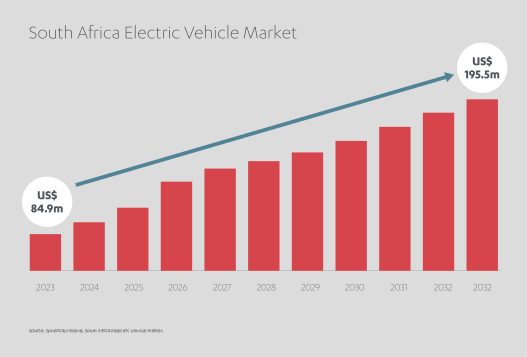
This trend is likely to continue. South Africa’s EV market size, valued at US$ 84.9 million as recently as 2023, is predicted to reach US$ 195.5 million by 2033, for a resounding CAGR of 8.7%.[7]
Why such bullish forecasts? The industry has recently witnessed a number of promising developments, and other potentially game-changing advances loom on the near horizon.
In October 2025 Chinese auto giant BYD revealed plans to install between 200 and 300 fast-charging stations across South Africa by the end of 2026, many powered by solar PV systems in off-grid areas.[8] Likewise, Zero Carbon Charge, an electric charging station contractor in Cape Town, is planning its own network of 120 off-grid EV charge hubs across South Africa. Construction has already begun on two ultra-fast stations along the N3 corridor between Johannesburg and Durban, in a project supported by equity investment from the Development Bank of Southern Africa.[9]
As charging options become more widespread, efforts are also underway to strengthen the country’s energy supply, which suffered such reputational damage during the load-shedding saga. The national power network has dramatically improved thanks to South Africa’s new Medupi and Kusile power stations commencing commercial operation. Just 26 hours of cumulative load-shedding was recorded between April and September this year.[10]
The Government, having seemingly dragged its heels on the urgency of supporting EVs, is also starting to give the sector concrete policy support. Beginning in March 2026, EV manufacturers will be entitled to claim 150% tax deductions for EV investments in the first year of production.[11] Looking further ahead, the government is committing ZAR 1 billion – approximately US$ 54 million – to turbocharge EV production over the next decade as part of its 2035 Automotive Industry Masterplan, focusing on vehicle production, batteries and support infrastructure. The ZAR 1 billion investment is expected to attract an additional ZAR 30 billion, or US$ 1.6 billion, in associated private sector funding.[12]
Government endorsement makes sound economic sense. Evidence suggests a flourishing new energy vehicle ecosystem stimulates the domestic sourcing of raw materials (for battery minerals, aluminum and components), with knock-on benefits for job creation and GDP[13].
Nor should one overlook the power of brand endorsement. Some brands have started selling their own sustainable SUVs and sedans, alongside plug-in hybrid (PHEV) options to ease range anxiety, while Toyota has unveiled plans to introduce its first three fully-electric models nationwide in 2026.[1]
And then there is the entry of Jameel Motors South Africa into the domestic marketplace, with its own exciting opportunity to redefine the public perception of EVs.
How is Jameel Motors contributing South Africa’s EV transformation?
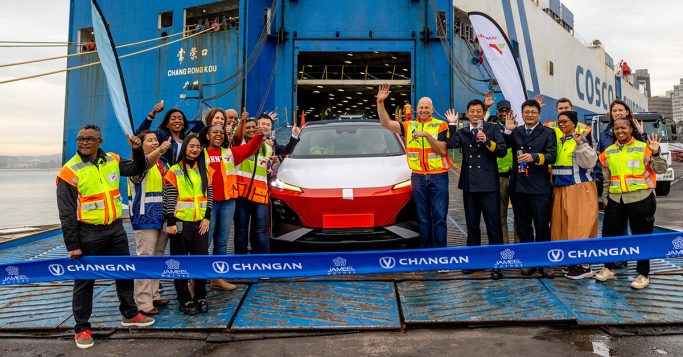
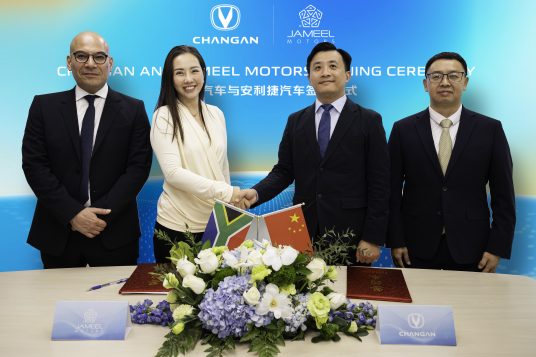
Jameel Motors has signed an agreement to distribute a suite of vehicles from Chinese manufacturer Changan Automobile in South Africa, including its Deepal S07 battery EV.
Changan Automobile is one of China’s four largest automotive groups, with a presence in 70 countries, sales of 2.7 million units (2024) and a strong focus on safety, innovation and technology. This includes more than 18,000 dedicated engineers and technicians working across R&D centres in 10 cities and 6 countries.
The agreement with Jameel Motors to introduce Changan in South Africa also includes two Changan pickup trucks – or ‘bakkies’ in South African parlance – known as the Hunter F70 and the Hunter K50, electric vehicles each featuring ‘range extender’ technology.
“The range extender EVs have been sparking most interest so far, because they circumvent fears about driving range and charging infrastructure,” Marinus explains.
“The technology operates around a fully-electric drivetrain, with a system that recognizes when battery levels fall to 20%-30%, at which point a back-up generator kicks in and charges the battery on-the-go. We have high hopes that these models will elevate us into a category where no rival vehicles can compete.”
Jameel Motors represents some of the world’s most recognised commercial and passenger vehicle brands and has operations in more than 10 countries across the Middle East, Africa, Europe, Asia and most recently Australia. The agreement with Changan marks another milestone as Jameel Motors continues to expand internationally and harness innovation for the future of mobility.
South Africa’s NEV market might have been operating at low voltage until now, but a switch has been flicked, and the sector can anticipate a fully energized future.
[1] https://autovista24.autovistagroup.com/news/which-brand-sold-the-most-evs-in-2025/
[2] https://wmo.int/news/media-centre/2025-set-be-second-or-third-warmest-year-record-continuing-exceptionally-high-warming-trend
[3] https://www.iea.org/reports/global-ev-outlook-2025/trends-in-electric-car-markets-2
[4] https://www.iea.org/reports/global-ev-outlook-2025/trends-in-electric-car-markets-2
[5] https://www.ev24.africa/south-africa-invests-r1-billion-to-scale-up-local-ev-production-by-2035/
[6] https://www.ev24.africa/south-africa-invests-r1-billion-to-scale-up-local-ev-production-by-2035/
[7] https://www.sphericalinsights.com/reports/south-africa-electric-vehicle-market
[8] https://www.ecofinagency.com/news-infrastructures/1910-49658-chinas-byd-plans-300-station-ev-charging-network-for-south-africa
[9] https://www.zawya.com/en/world/africa/south-africas-first-off-grid-n3-ev-chargers-under-construction-k8ho94vm
[10] https://businesstech.co.za/news/energy/838503/a-huge-nail-in-the-coffin-for-load-shedding-in-south-africa/
[11] https://investmentpolicy.unctad.org/investment-policy-monitor/measures/4902/south-africa-introduces-an-investment-allowance-for-new-investments-in-production-of-electric-vehicles
[12] https://www.ev24.africa/south-africa-invests-r1-billion-to-scale-up-local-ev-production-by-2035/
[13] https://naamsa.net/wp-content/uploads/2025/11/SAAW-2025-Report-1.pdf
[14] https://www.reuters.com/business/autos-transportation/toyota-enter-south-africas-ev-market-with-three-models-2026-2025-08-14/



 Warsaw, PolandMarch 27 , 20269 minute read


